The Libyan Center for Research and Studies Organizes a Commemorative Symposium Entitled: “Al-Hadi Al-Mshirqi… The Dialectic of the Liberation Struggle and the Architecture of the Libyan National State”
On the occasion of the 20th anniversary of the passing of the nationalist Al-Hadi Ibrahim Al-Mshirqi, and the 70th anniversary of the publication of his book “A Libyan in Japan”, the Libyan Center for Research and Studies organized a commemorative scientific symposium. The event featured the participation of a select group of researchers and academics from Libya and Algeria, alongside a number of individuals interested in Libyan history and the national movement.
The symposium aimed to shed light on Al-Hadi Al-Mshirqi’s political, diplomatic, and intellectual journey. It reviewed his roles in supporting liberation movements and anti-colonialism, his contributions to national work and the building of Libyan state institutions, as well as examining his intellectual and documentary output, travels, and memoirs.
The Opening Session and Honoring Ceremony
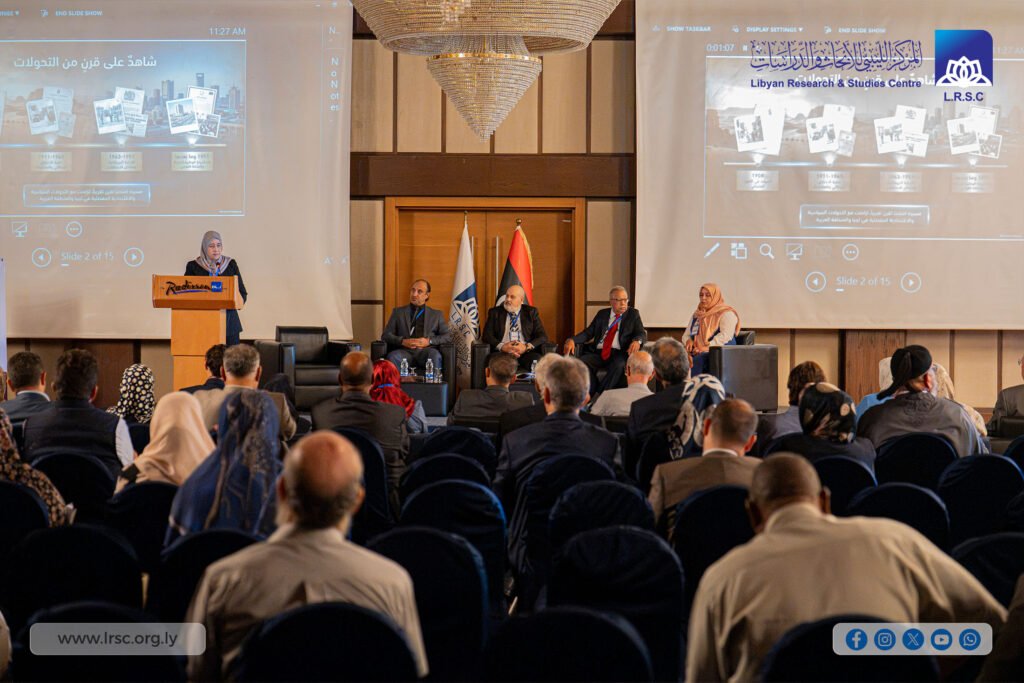
The symposium’s proceedings began with the recitation of verses from the Holy Quran, followed by the national anthem. This was followed by a speech from Mr. Mahmoud Al-Ghutmi, President of the Libyan Center for Research and Studies, who welcomed the participants and emphasized the importance of reviving national memory and introducing the Libyan figures who contributed to the national struggle.
Prof. Dr. Nasr Al-Din Al-Bashir Al-Arabi, Chairman of the Scientific Committee, also delivered a speech discussing the symposium’s significance in highlighting Al-Mshirqi’s experience and opening new horizons for research into various aspects of his life and contributions.
The session featured a speech by Mr. Ali Al-Hazel, representing the Libyan Center for Archives and Historical Studies, entitled “The Nationalist Al-Hadi Al-Mshirqi and the Libyan Center for Archives and Historical Studies,” followed by a speech by Ms. Bahija Al-Hadi Al-Mshirqi, representing the late figure’s family.
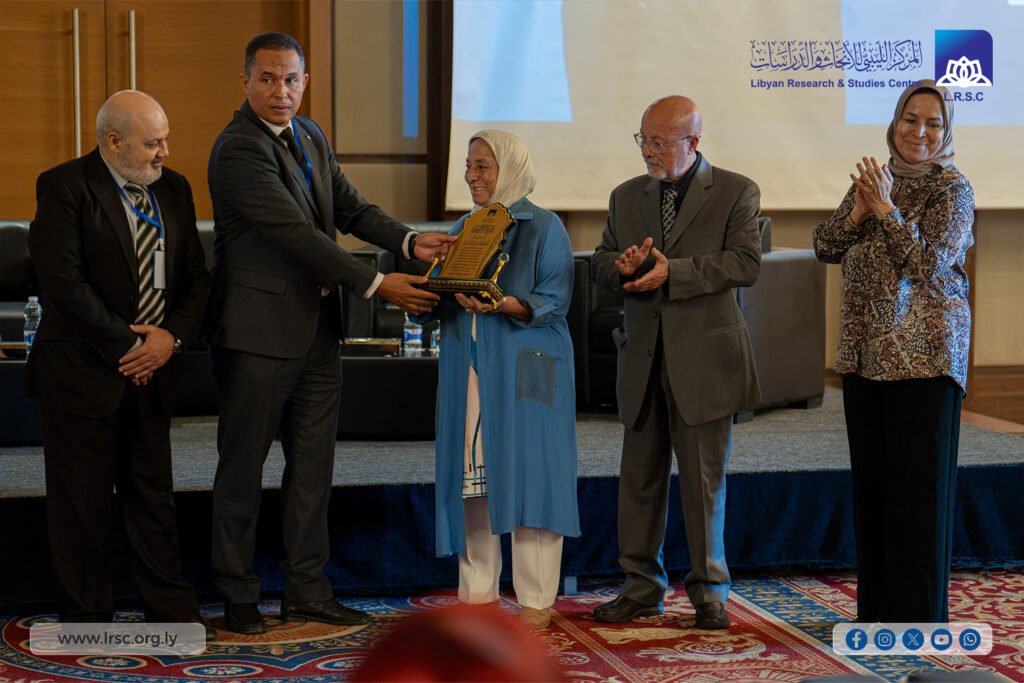
The program included the screening of a documentary film about the life of Al-Hadi Al-Mshirqi. His family was also honored with the shield of the Libyan Center for Research and Studies in appreciation of his patriotic journey and in remembrance of his contributions to Libyan history.
First Scientific Session
Chaired by: Prof. Dr. Nasr Al-Din Al-Bashir Al-Arabi
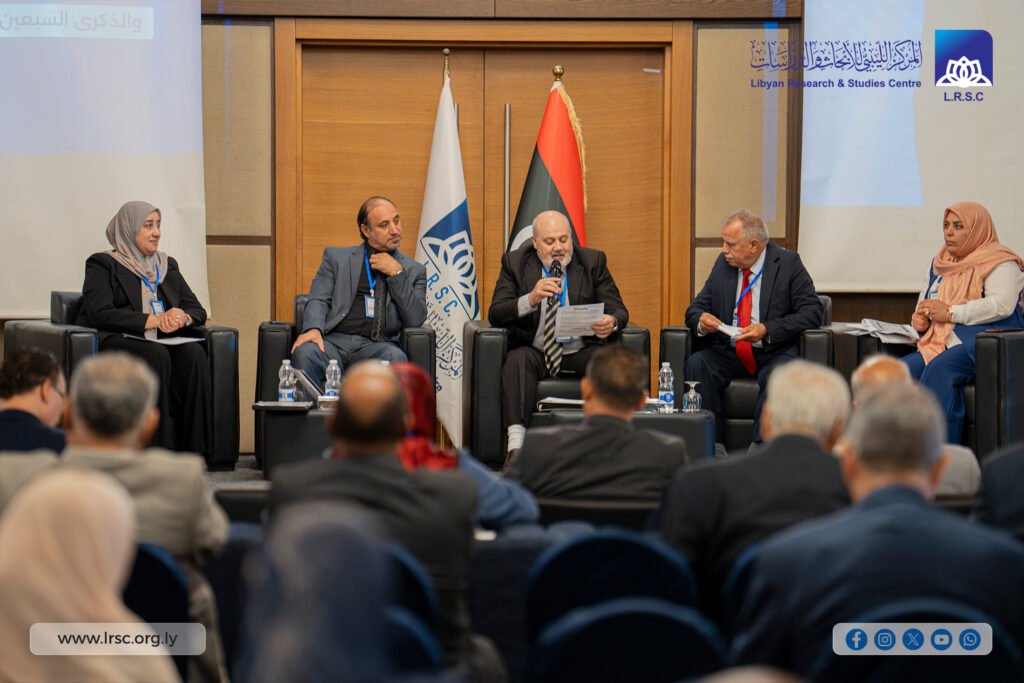
The first session addressed a collection of research papers that reviewed multiple aspects of Al-Mshirqi’s life and his national, diplomatic, and historical roles. The contributions were as follows:
Dr. Sumaya Salem Al-Shaali – Faculty of Arts, Sirte University, with a paper entitled: “The Nationalist Al-Hadi Ibrahim Al-Mshirqi: His Life and Works as a Model for Study 1908–2007.”
Prof. Dr. Mahmoud Ahmed Al-Deek – University of Tripoli, with a paper entitled: “Al-Hadi Al-Mshirqi and His Diplomatic Role in Supporting Liberation and Anti-Colonial Issues.”
Dr. Samir Bin Saadi – Mohamed El Bachir El Ibrahimi University, Bordj Bou Arreridj, Algeria, with a paper entitled: “The Documentary Approach in the Memoirs of Al-Hadi Ibrahim Al-Mshirqi, ‘My Story with the Revolution of a Million Martyrs,’ and its Role in Algerian Academic Studies.”
Prof. Dr. Al-Mabrouk Mahmoud Saleh – University of Tobruk, with a paper entitled: “Al-Hadi Al-Mshirqi and His Role in Commercial Activity.”
Dr. Al-Zarqa Salem Mohammed and Dr. Salma Yassin – Faculty of Arts, Sirte University, with a paper entitled: “The Role of Al-Hadi Al-Mshirqi in Establishing the Libyan Red Crescent Society and Empowering it Internationally 1957–1959.”
Mr. Younis Shaaban Al-Fanadi – Independent writer, author, and journalist, with a paper entitled: “A Libyan Buried in Algeria, A Story of Love and Struggle: Al-Hadi Al-Mshirqi and the Algerian Revolution.”
Dr. Omar Hussein Abu Shaala – University Professor, with a paper entitled: “The Political Philosophy of the Nationalist Al-Hadi Al-Mshirqi: Its Manifestations in the Ministerial and Legislative Experience and Its Role in Building the Libyan State.”
The session concluded with a general discussion that allowed attendees to exchange views and discuss the issues raised by the research papers.
Second Scientific Session
Chaired by: Prof. Dr. Mahmoud Mohammed Malouda
The second session continued discussing the dimensions of Al-Mshirqi’s experience, focusing on his relations with Maghreb liberation movements, his contributions to the Algerian Revolution, his published works, and his travel literature, through the following papers:
Dr. Boubaker Samari – Mohamed El Bachir El Ibrahimi University, Bordj Bou Arreridj, Algeria, with a paper entitled: “Al-Hadi Al-Mshirqi’s Contributions to Supporting the Algerian Revolution 1954–1962.”
Dr. Akram Othman Abdul Razzaq and Dr. Saleh Ali Awad Ali – University of Tobruk, with a paper entitled: “The National and International Dimensions of Al-Hadi Al-Mshirqi’s Journey.”
Dr. Fatima Ali Hadid – Libyan Center for Cultural Research and Studies, Msallata, with a paper entitled: “Al-Hadi Al-Mshirqi and Libyan-Algerian Solidarity During the Revolution 1954–1962.”
Mr. Alaa Al-Din Hassan Bin Dardaf – Independent researcher, with a paper entitled: “The Impact of Travels on Writing, Al-Hadi Al-Mshirqi as a Model: The Journey of My Observations in India.”
Walid Al-Hadi Maouma – Al Asmarya Islamic University, with a paper entitled: “Al-Hadi Ibrahim Al-Mshirqi 1908–2007: An Analytical Reading of His Published Works.”
Dr. Lamia Thabit – National Center for Research in Popular Resistance, National Movement, and the Revolution of November 1, 1954, Algeria, with a paper entitled: “From the Bridges of Libyan-Algerian Resistance to the Unity of Maghreb Destiny: Al-Hadi Al-Mshirqi as a Model.”
These papers were followed by a general discussion addressing the historical and intellectual visions presented, emphasizing the importance of continuing to study Libyan-Algerian relations and documenting the roles of national figures in supporting liberation movements and building national awareness.
Recommendations and Conclusion
The symposium’s proceedings concluded with the reading of the recommendations, with the participation of Dr. Fatima Ali Hadid on behalf of the Libyan Center for Cultural Research and Studies, wrapping up a scientific day that facilitated the exchange of knowledge and research expertise regarding the personality of Al-Hadi Al-Mshirqi and his diverse contributions.
The symposium emphasized the importance of continuing scientific research into the history of Libyan national figures, and strengthening efforts to collect, preserve, and archive the documents, memoirs, and correspondence related to them. It also encouraged academic studies addressing the liberation struggle and Libyan-Maghreb relations, alongside paying closer attention to Al-Mshirqi’s intellectual output and travel literature—foremost among them his book “A Libyan in Japan”—thereby contributing to the preservation of national memory and making it accessible to future generations.
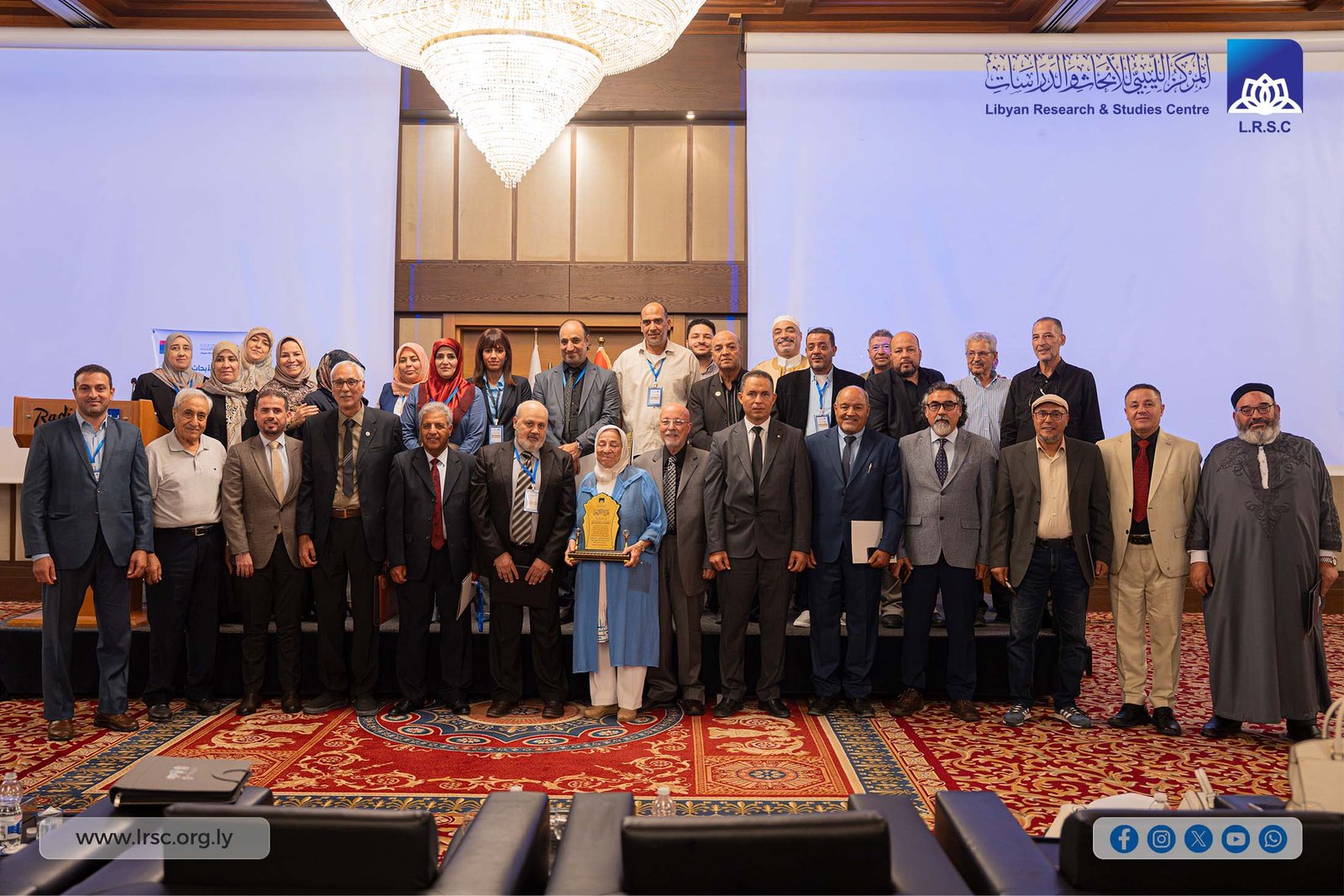
At the close of the event, group photos were taken gathering the researchers, participants, scientific committee members, and organizers to document this scientific and commemorative occasion.
The Libyan Center for Research and Studies extends its sincere thanks and appreciation to the family of the nationalist Al-Hadi Al-Mshirqi, the participating researchers, the scientific committee members, and everyone who contributed to the success of the symposium, valuing their scholarly participation and contributions to enriching the discussion on Libyan national history.
This symposium falls within the framework of the Center’s mission aimed at serving scientific research, documenting Libyan history, highlighting the contributions of its distinguished men and national figures, and enhancing academic dialogue on issues of liberation and state-building.