Arabism (Istʿrāb) and Arabists in Sub-Saharan Africa
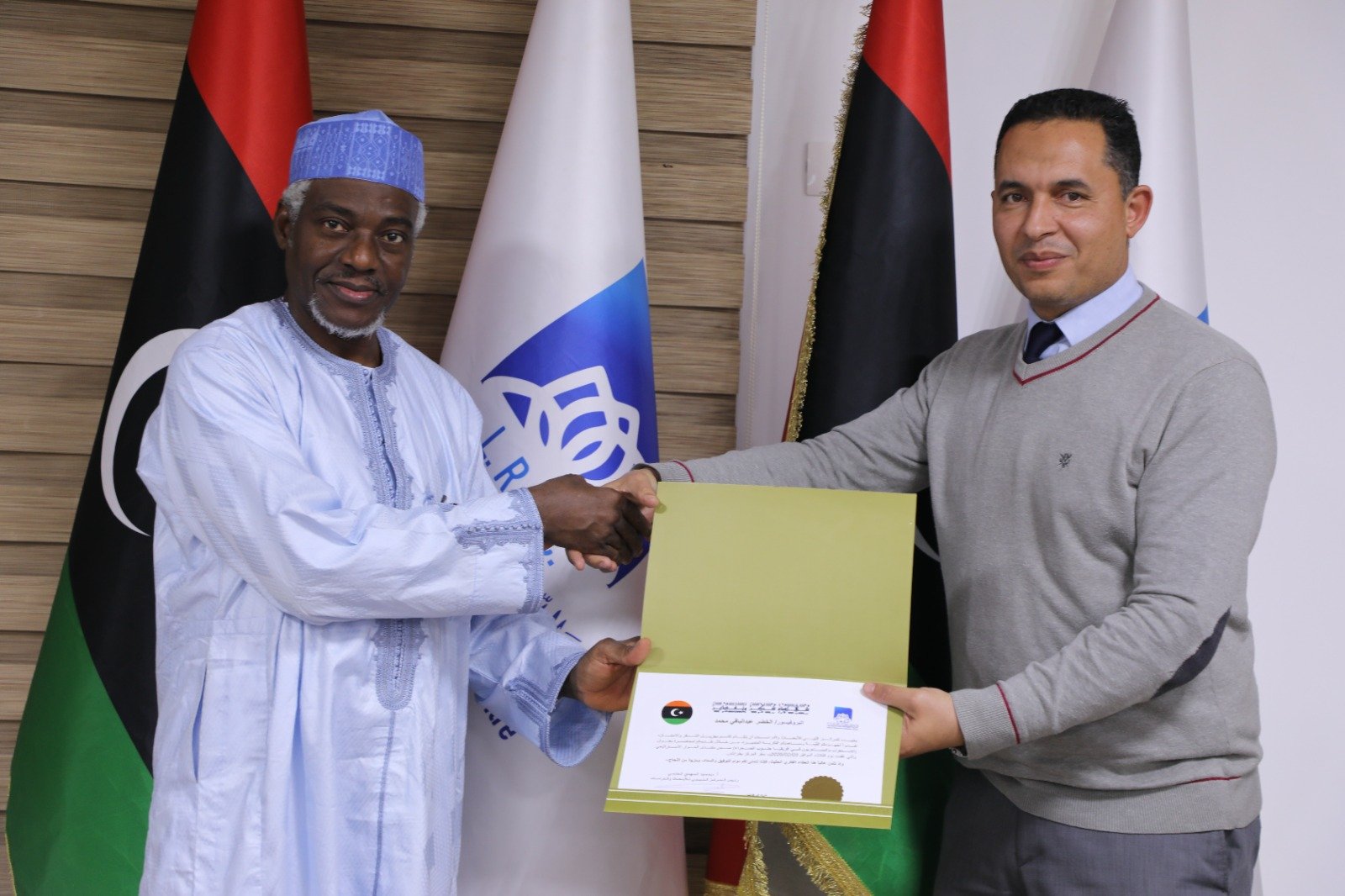
The Libyan Center for Research and Studies hosted Professor Al-Khidr Abdulbagi Mohammed, Director of the Nigerian Center for Arabic Research (Nigeria), at its headquarters in Tripoli. Professor Al-Khidr is a distinguished academic and one of Africa’s prominent scholars in the field of Arab and African studies.
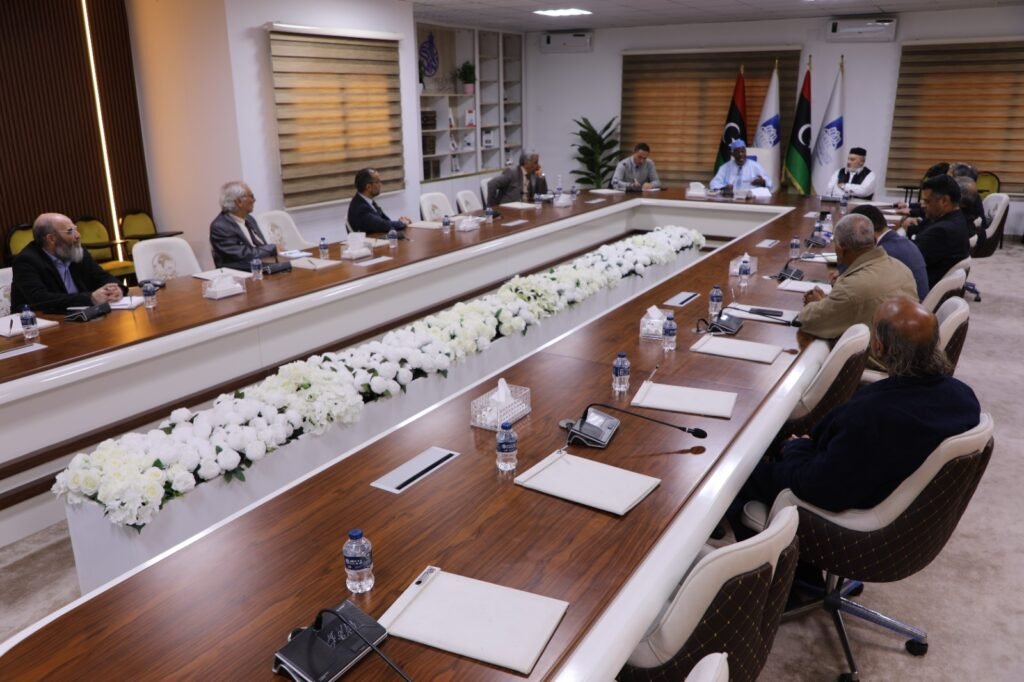
As part of the Strategic Dialogue Forum, the guest delivered a lecture titled:
“Arabism (Istʿrāb) and Arabists in Sub-Saharan Africa.”
The session was chaired by Prof. Dr. Nasr Al-Din Al-Arabi.
Structure of the Lecture
Professor Al-Khidr structured his lecture around four main themes:
- The literature of Arabism (Istʿrāb)
- African Arabists
- Challenges of cultural belonging
- Conclusions and recommendations
Concept of Arabism (Istʿrāb)
The lecturer explained that Istʿrāb corresponds conceptually to Orientalism in the Western tradition. However, the term Istʿrāb emerged much later in comparison to Orientalism. It was first used in Spain to describe scholars who studied the Arabic language, Arab culture, Andalusian history, and literature. Those scholars were referred to as “Arabists.”
The term was introduced into African academic discourse only recently—approximately within the last two decades.
African Arabists: Definition and Classification
African Arabists are scholars in non-Arab African countries who are engaged with the Arabic language and Arab culture. Professor Al-Khidr emphasized a fundamental distinction between African Arabists and Orientalists.
Most African (and Asian) Arabists are Muslims. Their engagement with Arabic language and culture does not stem from a confrontational perspective; rather, Islam played a central role in their Arabization. Unlike Orientalists, they do not approach Arabic culture from an external or adversarial standpoint. Furthermore, the term specifically applies to scholars from non-Arab African states.
He classified African Arabists into three main categories:
- Those who speak Arabic fluently and take pride in their Arab cultural affiliation.
- Those who possess working knowledge of Arabic, maintain a neutral cultural position, and are typically employed in academic institutions to teach Arabic.
- Those who do not speak Arabic but deeply admire and advocate for it. This group represents the majority in non-Arab Africa.
Internal Challenges
Professor Al-Khidr identified several internal challenges facing African Arabists:
- Issues related to cultural self-awareness.
- Weak perception of cultural identity.
- Decline in linguistic proficiency.
- The diminishing role of intellectual elites.
In certain Francophone African countries, Arabists historically faced institutional marginalization due to French colonial policies. They were excluded from senior governmental positions, denied representation among national elites, and often received lower salaries than their Francophone counterparts. However, the lecturer noted that these policies have significantly weakened over the past two decades with the decline of French influence across much of the African continent.
Another persistent challenge is the confinement of graduates educated in Arab or Islamic countries to religious and judicial roles—such as Sharia courts, pilgrimage administration, or religious advocacy. This limitation stems from the predominantly religious education they received, while modern scientific and technical fields—such as computer science, engineering, medicine, and applied sciences—were largely neglected. The lecturer acknowledged that many Arab and Islamic countries have recently begun addressing this gap by offering scholarships in contemporary disciplines alongside religious studies.
Additionally, African Arabist literary and cultural elites often face marginalization within their own countries. This includes limited representation in writers’ unions, barriers to literary awards, and negative portrayals in media. In some cases, they are stereotyped as practitioners of superstition simply for engaging with classical Arabic texts or are accused of opposing modernity—characterizations the lecturer described as inaccurate and deeply flawed.
External Challenges
Professor Al-Khidr also addressed external pressures, including:
- Accusations that African Arabists serve as instruments of “Arab colonialism.”
- The invocation of specific historical events—such as instances of Arab involvement in the slave trade—to undermine contemporary engagement with Arabic language and culture.
Conclusions and Recommendations
In his concluding remarks, Professor Al-Khidr outlined several recommendations directed at Arab countries in support of African Arabists:
- A comprehensive reassessment of Arab approaches to Africa, including the modernization of development programs and initiatives offered to non-Arab African countries.
- A critical review of how Arabs perceive Africa, including academic partnerships between Arab universities and their African counterparts, as well as broader cultural policies.
- Diversifying Arab engagement with Africa beyond a purely religious framework.
- Re-evaluating Arab identity discourse to ensure it becomes inclusive, modern, and civilizational rather than exclusionary or ethnocentric.
Discussion and Closing
The lecture concluded with an open discussion session. Contributions were made by Mr. Jamal Duwish, Director of the Research and Studies Department at the Libyan Center for Research and Studies; Mr. Rami Kaal, Advisor at the Libyan Ministry of Foreign Affairs; Mr. Hussein Al-Mazdawi, Ambassador at the Libyan Ministry of Foreign Affairs; Ms. Latifa Hamed Abu Sraywil, a history teacher; and Mr. Wissam Saleh, a researcher in African studies.
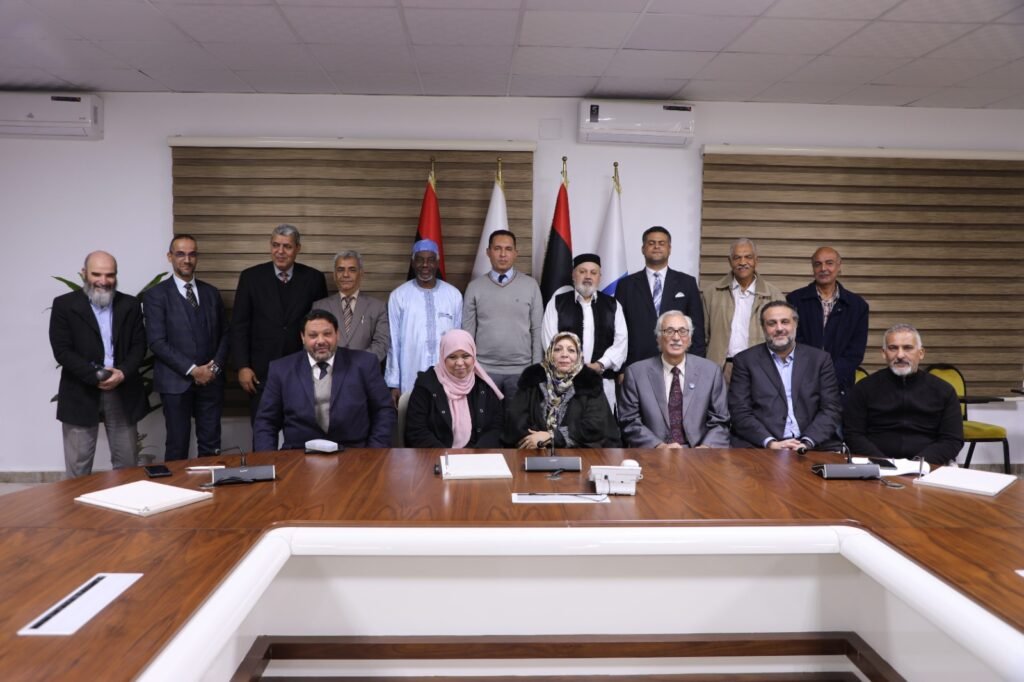
Professor Al-Khidr responded to all questions and interventions, further enriching the discussion. The event concluded with a group photograph and a tea and coffee reception.