Libyan Islamic Inscriptions: Reality and Prospects
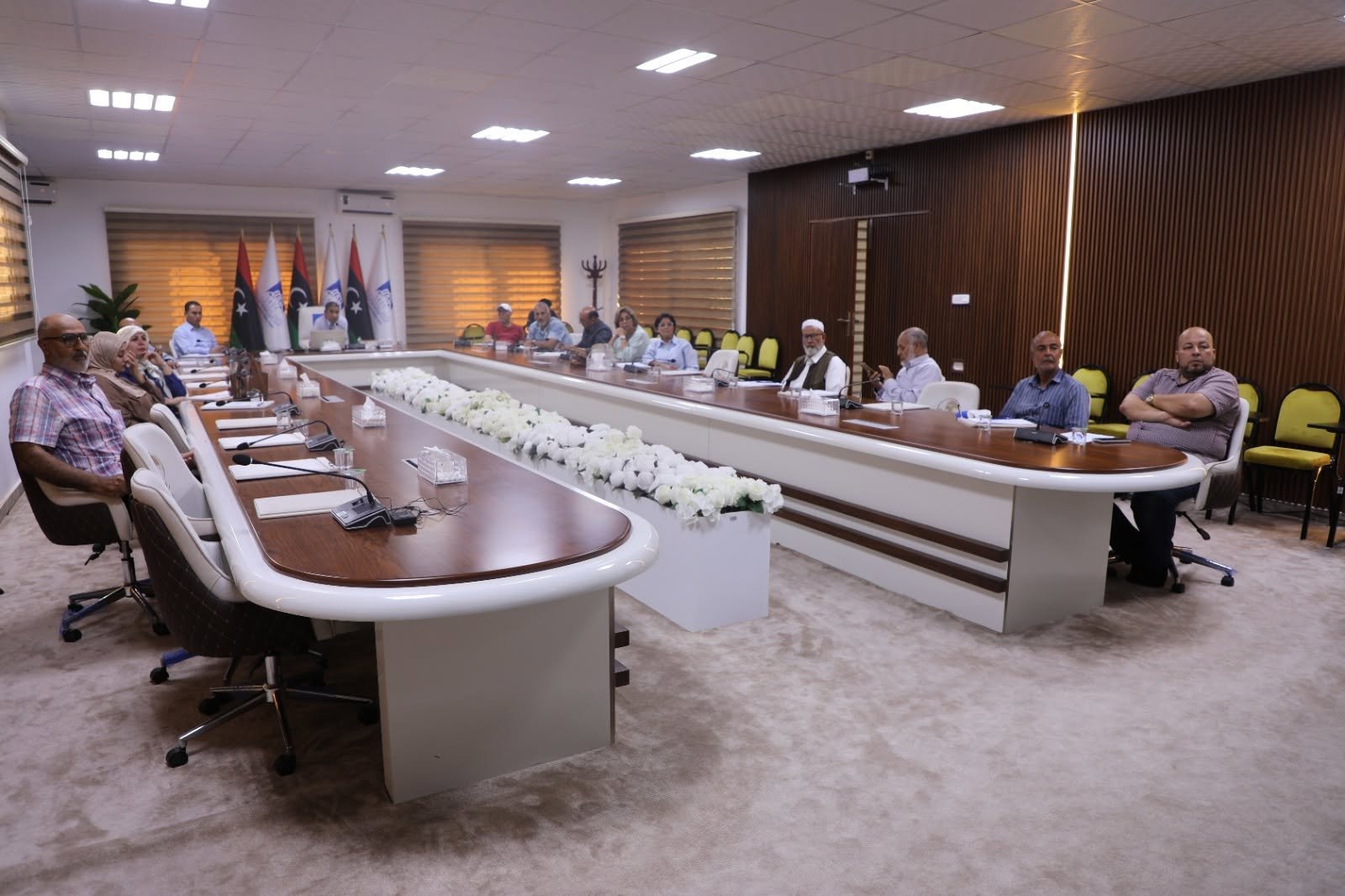
On Sunday, June 14, 2026, at 5:30 PM, the Libyan Center for Research and Studies hosted a lecture at its headquarters as part of its cultural season. The lecture, titled “Libyan Islamic Inscriptions: Reality and Prospects,” was delivered by Dr. Ali Al-Shaib Al-Awaini, Professor of Islamic Archaeology at the University of Zaytuna in Tunisia.
The lecturer began by thanking the Libyan Center for Research and Studies for the invitation. He then provided an overview of epigraphic studies (catalogues) worldwide, noting that the first of these was the Sicilian catalogue by the Italian scholar Amri in 1875, followed by the catalogue of Arabic and Turkish inscriptions in Algeria in 1901, and the Asia Minor catalogue in 1910. A catalogue, he explained, is a comprehensive and detailed scholarly study of inscriptions, supported by photographs and maps.
The lecturer introduced some of the earliest Arab scholarly efforts in the field of epigraphic records, such as those undertaken in Tunisia by Dr. Suleiman Mustafa Zbeiss between 1956 and 1972. In Libya, epigraphic records were very limited compared to other Arab countries. The first serious attempt was by the Italian orientalist Ettore Rossi, whose work, “Arabic and Turkish Inscriptions in the Libyan Islamic Museum,” was not a comprehensive study, but it was a valuable contribution. Later, the Italian archaeologist Salvatore Origma focused his work on the defensive fortifications of Tripoli.
For Libyan specialists, the first attempts were by Professor Suleiman Belhaj, who published research on “Gravestones in Cyrenaica during the Islamic Era,” followed by the efforts of researcher Inas Boubtana from the University of Benghazi. In the western region of the country, the efforts of researcher Muhammad Salem Al-Warfali stand out, as he dedicated his work to writing about “Archaeological Inscriptions in Some Religious Buildings in the Nafusa Mountains in Three Mosques.” Subsequently, the researcher and lecturer, Dr. Ali Al-Shaib Al-Awaini, completed his extensive study entitled “Inscriptions in Tripoli during the Ottoman Period 1551-1911 AD: An Epigraphic and Historical Study,” which he defended at Aix-Marseille University in France in 2014. It is published in three volumes in French and has not yet been translated into Arabic. In this thesis, Dr. Ali studied 159 Ottoman inscriptions he collected from landmarks in the city of Tripoli, spanning the period from 1555 to 1906 AD. Most of these inscriptions were previously unpublished, and he focused his study on… The lecture explored the historical and stylistic aspects of inscriptions (ornamentation, materials, and script), while also highlighting their linguistic value, whether in Arabic or Ottoman Turkish. Translations and commentaries were provided with the texts to clarify their meaning.
The lecturer presented dozens of illustrated examples of inscriptions from tombstones, mosques, zawiyas (Sufi lodges), schools, and military barracks. He also displayed an inscription from the Darghouth Mosque, which he described as the first Ottoman religious building in Tripoli, and photographs of a sundial (mazulah) that was once part of the mosque’s wall, crafted by Mustafa al-Sa’ati in 1590 CE.
He then displayed inscriptions from the Ibn al-Tabib Mosque in the al-Harara market in Tripoli’s Old City, dating back to 20 Jumada II 962 AH (May 21, 1555 CE), and inscriptions from the al-Naqa Mosque. He also gave a brief overview of Dar al-Baroud, which he described as the first Ottoman military landmark in Tripoli, along with an inscription from that building dating back to 1567 CE. Other inscriptions he displayed included one from Bab al-Manshiya, one from the Ahmad Katkhuda Mosque, one from the Mustafa ibn Abdullah Mosque in the al-Dhahra district, one from the al-Qabtan Mosque, one from the al-Mukanni Mosque dated Sha’ban 1123 AH (September 1711 CE), and another from the al-Nawfaliyyin Mosque dating back to 1685 CE, which he found hidden behind an air conditioner on the mosque’s exterior wall.
The author emphasized that most inscriptions from the Karamanli era were written in Arabic due to the Arabization of the administrative offices by the Karamanli princes. In contrast, during the first and second Ottoman periods, inscriptions were written in Ottoman Turkish, particularly on military buildings. The lecturer also presented some examples of lost water features in Tripoli, such as the Boumliana fountain.
The lecturer then discussed an interesting scientific topic: the tombstones in some Tripoli cemeteries during periods of plague, which struck the city repeatedly. He cited an inscription on a tombstone dating back to 1606 CE in the Sidi Munther al-Afriqi cemetery, stating that the deceased died from the plague.
He also mentioned the tombstone of Hassan Bey ibn Ali al-Karamanli in the Ahmed Pasha Mosque cemetery, who was assassinated by his brother Yusuf. His tombstone states that he died from a stab wound.
Regrettably, the lecturer confirmed that 90% of the Ottoman inscriptions in Tripoli, which once adorned numerous plaques and monuments, have been destroyed in the ongoing attacks on antiquities since 2011. This is a true catastrophe for our national memory.
At the end of the lecture, the author recommended to the Libyan Department of Antiquities the establishment of a museum of Islamic inscriptions in Libya to preserve national memory and identity, allowing the stone monuments to speak for themselves.
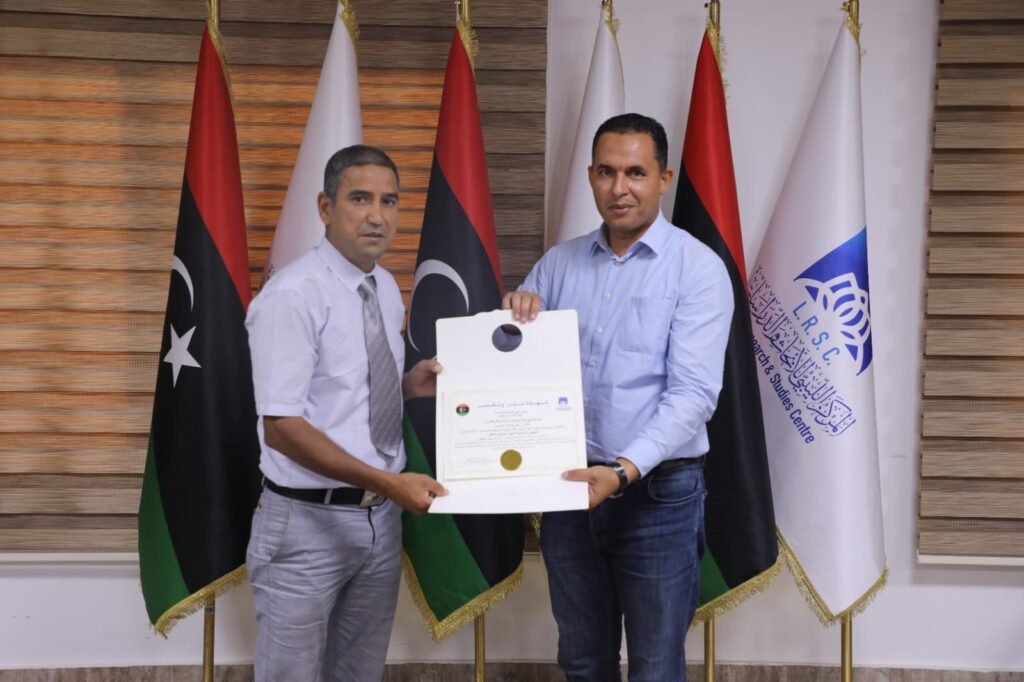
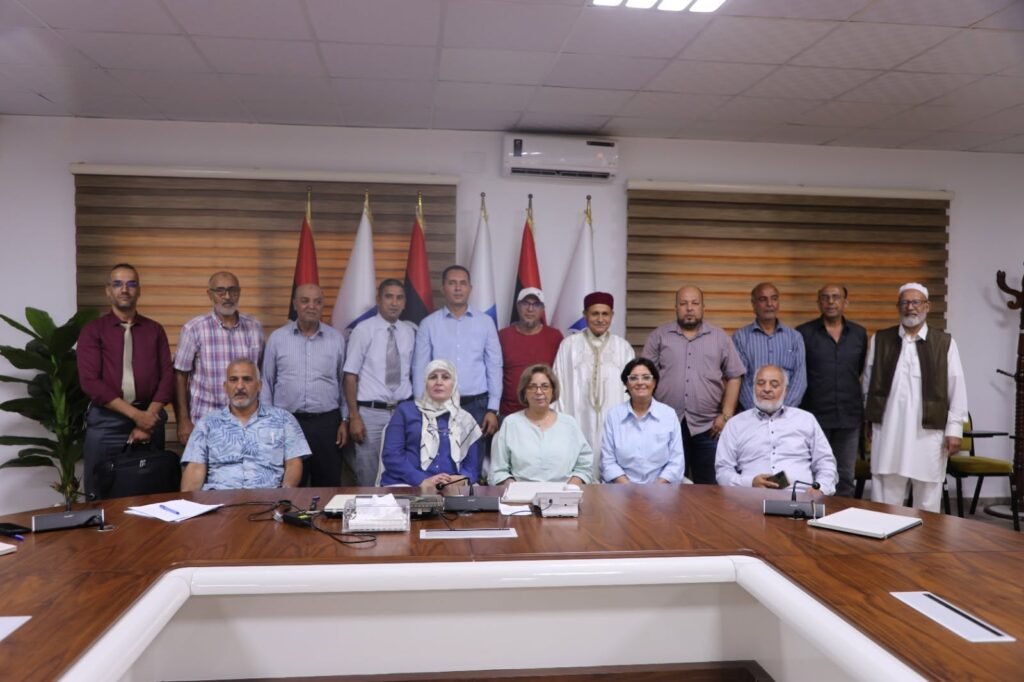
Following the lecture, which was moderated by the center’s director, Mr. Mahmoud Al-Ghatmi, the floor was opened for discussion and questions. Several interventions and comments were made by Mr. Salah Khalil, Professor Ibrahim Al-Sharif from the National Center for Archives and Historical Studies, the poet and writer Khaled Darwish, Professor Wahid Al-Jabou, Professor Wissam Saleh, and Professor Dr. Fathi Al-Qasimi, a distinguished professor at the Institute of History and Civilization at Al-Zaytuna University in Tunisia. The cultural evening concluded with a group photo of the attendees and a tea and coffee reception.